Wait, IS our work our family??
How family dynamics play a role in our work, ew!

As I write this I’m at a conference for my job, sitting poolside (Okay, Rest!) with some really cool adult and youth community leaders. There’s laughter and music in the background, the sun is shining and it’s hot out. Luckily, I already got in the pool and I’m feeling cool and comfortable drying in the shade.
Just a few hours ago, though, I was having a really bad time. I went through a lot of big emotions today. During the conference, some leaders called on people to improve the way they do things, focusing on aspects of this work that I struggle with. I was feeling like I wasn’t doing enough. I know not everyone will be good at everything but I love my day job and I only want to do my best so hearing how I was potentially letting folks down put me into a little shame spiral. I cycled through some big feelings and told myself a lot of stories to help manage those feelings:
Well, wasn’t I doing my best? (insecurity, fear)
They should help more! (indignation, resentment)
How dare they say this to me! (anger, entitlement, major resentment)
I work so hard! This is rude. (self pitying)
Maybe I suck and should quit my job and let someone else do it. (major self pity and negative fantasy)
How exhausting!
I know some of this is my own ego being puffed up and moving through normal responses to shame but I think a part of this is deeper and actually related to the way I grew up. I’m the oldest of three and definitely hold "eldest daughter” as a part of my identity (even though I’m nonbinary and don’t identify as a girl. That’s gay math for ya!). The term “eldest daughter” can mean different things to different people but for me, it’s a big part of how I came to be hyper independent, overly vigilant, perfectionistic and easily prone to burn out from people-pleasing. And not just in my personal life. It turns out I’ve been bringing all of this baggage from my childhood into work with me! I’ve been learning over the last decade the impact that family dynamics have in my worklife and, wow, there is a LOT there.
I guess the first thing I had to work out was since I brought all of my childhood trauma and family ways into work, does that mean my work is my family??
Your Colleagues Are Not Your Family
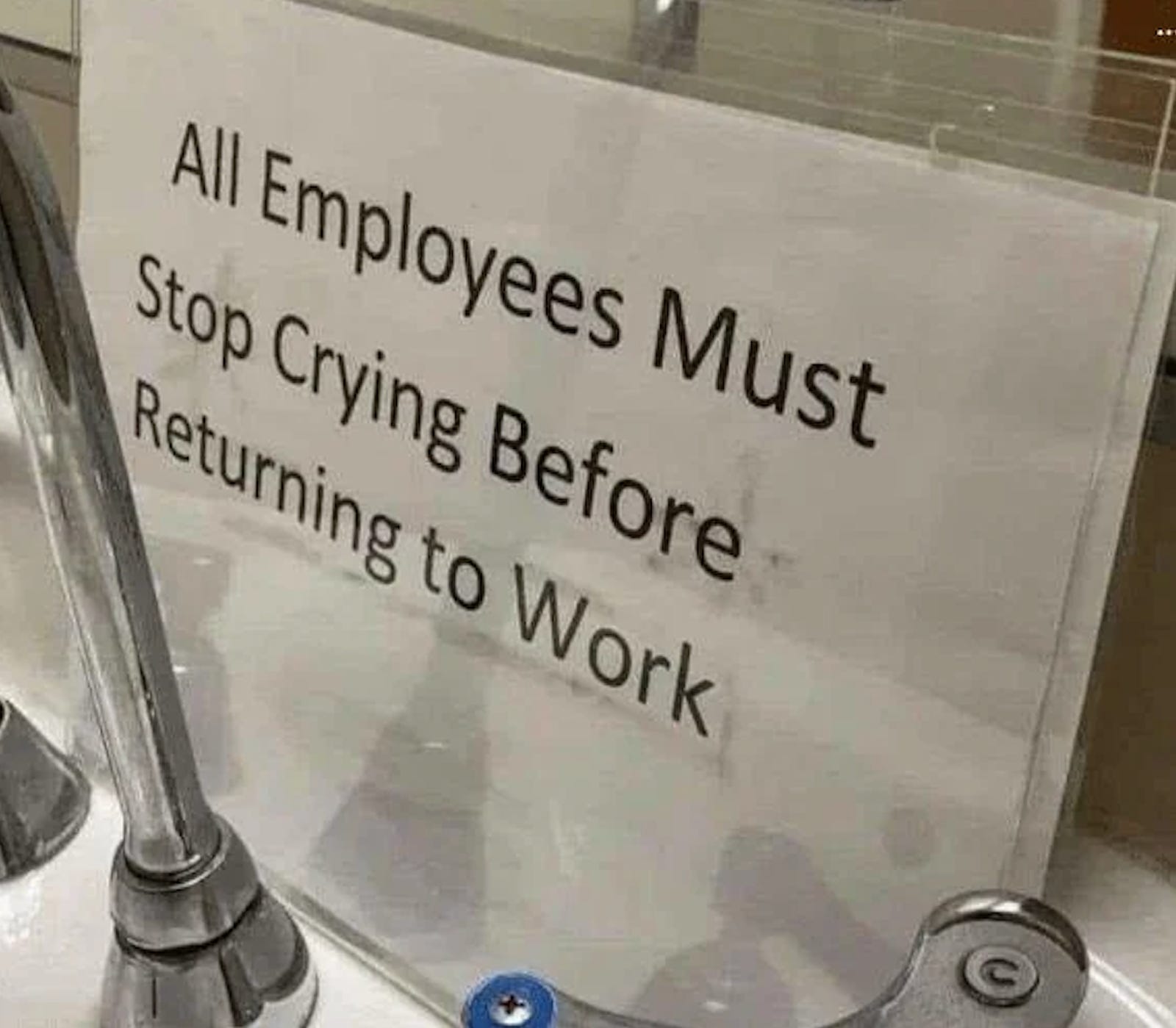
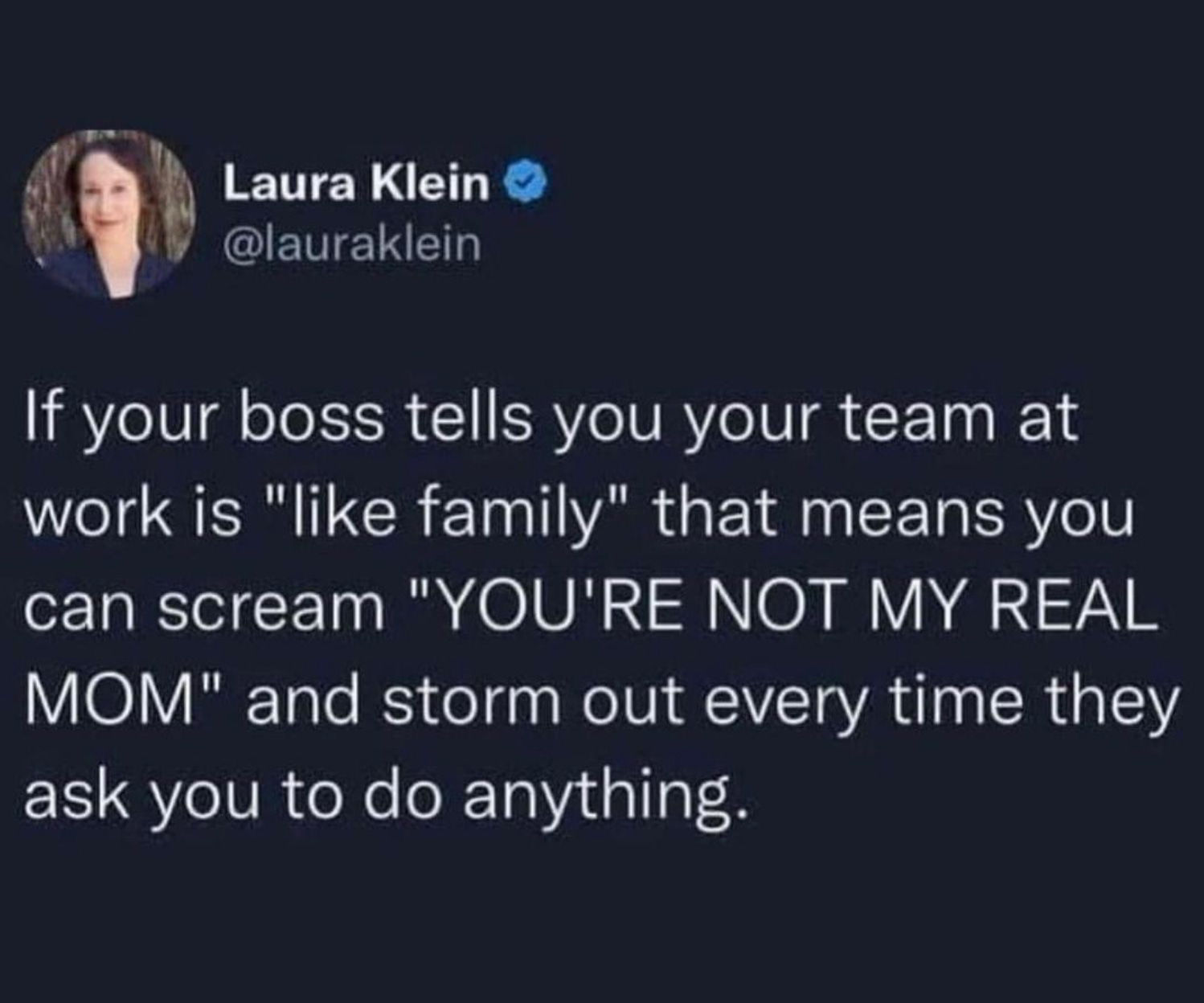
Immediately, let me say, very clearly and in no uncertain terms, that our colleagues, boss, company and business are 100%, absolutely and unequivocally NOT OUR FAMILY. When I hear things like that, I actually get pretty annoyed now. I have had a lot of bosses over the years who have used the idea “We are all one big family here!” as a way to either manipulate paid staff or unknowingly buy into this sort of lie for themselves. And for a long time I really drank that kool-aid it but there’s like a million reasons why it’s messed up.
First off, the concept of families are culturally specific and “family” means something different to collectivist vs. individualist societies. People from individualist cultures may not think that family is that big of a deal but the bonds formed in collectivist cultures can feel unbreakable and like the most important thing in the world. Also, getting people to believe that the workplace is all one big family is a great way to erase boundaries and justify exploitation. AND marginalized employees are more easily gaslit into unpaid labor than their more privileged peers. Also if a workplace serves marginalized populations and those serving them are also a part of those populations (think people of color working to help uplift other folks of color, queer people working to help other queer people, etc.) then is makes it even more dangerous to fall into that trap, looping clients, patients and customers into that same family narrative in order to control paid staff.
So, no, your work is not your family in the way that “the man” wants you to think it is. Even if you do have an amazing work wife.
How Family Dynamics Play Out at Work
Whether we realize it or not, we all bring our family habits and behaviors to work with us every day, unfortunately. This scholar’s research on family of origin influence shows, our early family experiences shape how we handle leadership, power, conflict, and belonging in the workplace.
Also, Bowen Family Systems Theory teaches us about the 8 different types of unhealthy patterns that can be enacted in families. I added some examples of how we might be bringing these into the workplace:
Differentiation of Self: Can you stay calm in conflict at work, or do you absorb other peoples’ emotions like a sponge? This can look like loose or non-existent boundaries.
Emotional Fusion: A state where one becomes overly enmeshed with others emotionally. Think codependency, emotional manipulation, annoying overly familiar colleagues when we don’t even know each other like that.
Triangulation: That thing that happens when you complain to a coworker about your other coworker instead of addressing issues directly? Classic family-style triangulation.
Projection: If you have ever gotten irrationally annoyed by a colleague's "laziness" that reminds you of your sibling, that's projection at work.
Societal Emotional Processes: This could be someone who has a crisis mentality all the time or even a worship of authority.
Emotional Cutoff: The coworker who suddenly quits after minor conflict? They might be repeating a family pattern of avoiding tough emotions.
Multigenerational Transmission: That "keep your head down and work hard" mentality many of us inherited? It might be keeping you from speaking up about important issues.
Sibling Projection: The unconscious transfer of childhood sibling dynamics (rivalries, roles, and emotional patterns) onto workplace relationships
When we don't recognize these patterns, our bodies literally think our workplace is our family. We react to bosses like parents, colleagues like siblings, and workplace conflicts like childhood wounds. This can lead to things like:
Taking professional feedback as personal attacks
Overworking to earn "love" from employers
Avoiding necessary conflict to keep the "family" peace
Repeating generational trauma through workplace dynamics
SO EMBARRASSING! How do I stop this cycle?
The great news is that awareness is most of the battle! We can begin to spot our patterns. The more we look for them, the more we will find and the more we have control over stopping them. For instance, when we have a strong emotional reaction at work it might be good to ask ourselves “Does this remind me of something from my family?" The phrase “If I am hysterical, it’s probably historical” has saved me on many occasions!
We can also practice the "Use of Self" Framework which just means we try to bring our whole selves to work, intentionally. Like how can I honor my history, emotions AND growth edges? Is this situation triggering wounding brought about by systems of oppression like colonization or capitalism? If so, can I take a moment to honor the feelings it all brings up? There’s also the “Name It to Tame It” trick. I like to say how I am feeling and what I am noticing out loud. For instance I might say "I notice I'm people-pleasing/fawning like I did with my mom", “I feel like a little kid when I am around my boss” or "I'm feeling extreme anger like I did when I didn’t have agency as a young child in my family”.
You can also create new responses! Some things you might try are:
Taking a breath before reacting - this one is so hard, it definitely takes practice.
Using mindfulness practices to ground. I like sensations grounding.
Using "I" statements in conflict (I notice I’m feeling defensive when feedback comes in group settings. I’d appreciate 1:1 conversations first, thanks)
Setting kind but firm boundaries (No is a complete sentence but at work we might just say “No thank you”.
Delegating work instead of (potentially angrily and passive-aggressively) taking on everything.
Looking at our side of the street, AKA double checking ourselves and our work and motives to see how we can best move forward.
Not saying yes to everything that comes our way. Communicating when our plates are full.
So when I found myself getting activated by my big feelings at this conference, I really pulled out my whole toolkit. I breathed through the moment and reminded myself I don’t have to be perfect. I grounded by using all five of my senses so I could listen more clearly to what was being said in the moment. I tried to focus on the work until I had a moment alone. When I was alone, I called a friend and talked it out, stating out loud the things I noticed. I hugged myself and talked to my inner kid. After that I felt like I was back to normal and I actually had the best time at the conference!
Some folks may feel like this type of emotional self care is excessive for work and, hey, we may not have time in our workdays to complete this level of extended care for ourselves but we can do some of this really easily, in almost any workplace setting. So, even though we can't change our family of origin, we can choose how it influences our work life and how to move through the feelings that family dynamics at work bring up for us. Each time we notice and pause these patterns, we create workplaces that are more authentic, harmonious and joyful for everyone. Especially us! And we deserve that.
Stay soft and have a very gentle monday!
Love this! ❤️